


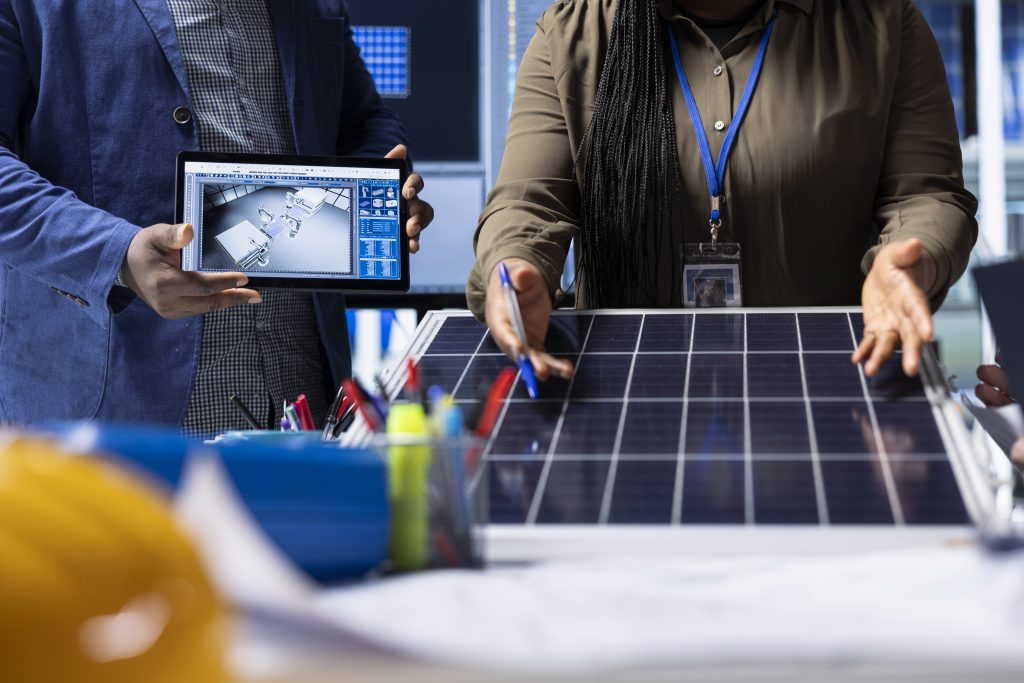
The global transition toward renewable energy is no longer just a distant ideal; it is an urgent reality unfolding across the world. In India, the push for clean energy has triggered a massive industrial shift, moving away from traditional fossil fuels and toward sustainable alternatives. While much of the nation’s attention has historically been directed toward the western and southern states for industrial innovation, a silent green revolution is taking place in the East. Kolkata, the “City of Joy,” is rapidly emerging as a crucial hub for solar panel manufacturing.
This transformation is not just about producing clean energy components; it is about reshaping the industrial identity of West Bengal, creating green-collar jobs, and providing localized energy solutions tailored to the unique demands of eastern India.
The Strategic Advantage of the East
Kolkata holds a unique geographical and economic position that makes it an ideal incubator for solar manufacturing facilities. As the primary commercial and financial hub of Eastern and Northeastern India, the city serves as a natural gateway for regional distribution.
Manufacturers based in and around Kolkata benefit immensely from robust logistical connectivity. The proximity to major ports allows for the streamlined importation of essential raw materials—such as tempered solar glass, specialized polymers, and highly purified silicon cells—that are not yet abundantly produced domestically. Furthermore, this same port access provides a strategic launchpad for exporting finished solar modules to neighboring international markets, including Bangladesh and Southeast Asia.
Beyond logistics, Kolkata boasts a rich legacy of engineering excellence. The city and its surrounding regions are home to top-tier technical institutes, ensuring a steady pipeline of skilled electrical, mechanical, and industrial engineers. This access to a specialized workforce is critical for operating the highly automated, precision-driven assembly lines required to produce modern, high-efficiency solar panels.
Inside the Manufacturing Process: Precision and Quality
When you step onto the floor of a modern solar manufacturing plant in Kolkata, you are met with cutting-edge technology. Local production facilities are increasingly moving away from manual assembly and adopting fully automated, robotic assembly lines.
The process begins with the careful sorting and testing of photovoltaic cells. These cells are then precisely soldered together to form strings. To ensure the panels can withstand decades of exposure to the elements, local manufacturers utilize advanced encapsulation techniques. The cell strings are sandwiched between layers of Ethylene Vinyl Acetate (EVA) and protected by high-transmittance, anti-reflective tempered glass.
Crucially, manufacturing locally means that the final product can be tested rigorously against the specific environmental challenges of the region. Solar panels produced in Kolkata are often engineered with a deep understanding of the local climate—specifically designed to endure the intense heat of the Indian summer, high coastal humidity, and the severe wind loads of the annual monsoons. Heavy-duty anodized aluminum frames and superior edge-sealing techniques are standard protocols, ensuring that the modules do not suffer from moisture ingress or micro-cracking over their 25-year lifespans.
Why Buying Local Matters
For commercial developers, residential complex builders, and individual homeowners in Eastern India, sourcing solar panels from a Kolkata-based manufacturer offers several distinct advantages over importing them from other states or overseas.
- Minimized Transit Damage: Solar panels are relatively fragile before installation. Procuring modules locally significantly reduces the distance they must travel, thereby minimizing the risk of micro-cracks and transit-related damage that can compromise a panel’s efficiency.
- Cost-Effective Logistics: Shorter transportation routes translate to lower freight costs. This reduction in logistical overhead helps keep the final cost of the solar panels competitive, making solar adoption more accessible to a broader demographic.
- Rapid After-Sales Support: One of the most significant benefits of local manufacturing is accountability. If an issue arises or a warranty claim needs to be processed, dealing with a manufacturer located just a few kilometers away is infinitely smoother than coordinating with a factory on the other side of the country. Replacement parts and technical support can be deployed in a fraction of the time.
- Lower Carbon Footprint: The very essence of solar energy is environmental sustainability. By purchasing locally manufactured panels, consumers drastically reduce the carbon emissions associated with long-haul transportation, making their shift to green energy truly holistic.
Powering the Local Economy
The growth of solar panel manufacturing in Kolkata extends its benefits far beyond the energy sector. It serves as a powerful catalyst for the local economy. A single manufacturing plant requires a vast ecosystem of ancillary industries to function. This drives demand for local aluminum extruders, glass suppliers, packaging companies, and logistics providers.
Moreover, this sector is a massive engine for employment. From research and development to factory floor operations, quality control, and administrative roles, the solar industry is providing sustainable, future-proof career paths for thousands of residents in West Bengal.
A Bright Horizon
The trajectory of solar panel manufacturing in Kolkata is clear and upward. As technology advances, local facilities are already beginning to explore next-generation manufacturing, including higher wattage modules and bifacial panels that capture sunlight from both sides.
Kolkata is proving that it is not just adapting to the renewable energy era; it is actively forging the tools to power it. By combining strategic geographical advantages, a skilled workforce, and a commitment to high-quality production, the city is cementing its status as a vital powerhouse in India’s clean energy future.