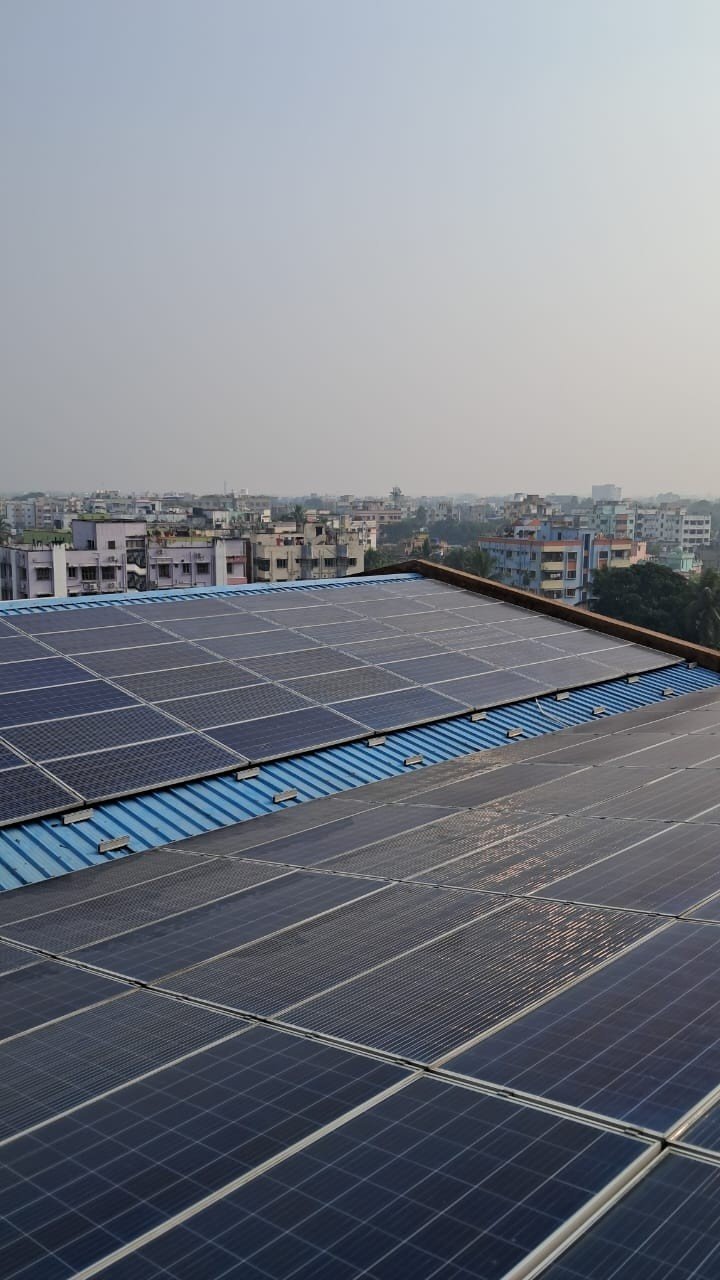

Running a factory or warehouse in West Bengal means dealing with high power bills every month. Daytime electricity use stays heavy, diesel generators burn through cash, and tariffs keep climbing. Rooftop solar has become a practical way out for many businesses here. Most systems pay for themselves in three to five years and keep producing power for twenty-five years or more. The combination of large industrial roofs, strong daytime demand, and decent sunshine makes the state a natural fit for Commercial Solar Systems.
West Bengal gets between 4.2 and 5.0 kWh of solar energy per square metre on an average day. A properly designed system usually delivers 1,400 to 1,500 units per kilowatt each year. With commercial and industrial tariffs sitting between ₹7.5 and ₹9 per unit, the numbers start looking attractive for manufacturing units, logistics parks, cold storages, and processing plants in places like Howrah, North 24 Parganas, Hooghly, Haldia, Bankura, and around Kolkata.
Why Solar Fits Factories and Warehouses So Well
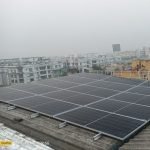
Industrial sites have a few built-in advantages. Most PEB and metal shed roofs offer plenty of open space with limited shading. Operations run hardest during daylight hours, which lines up nicely with peak solar production. Machinery, refrigeration, lighting, and material handling create steady daytime loads that solar can offset almost immediately. Cutting diesel generator hours improves both reliability and the overall cost picture. Once installed, these systems keep generating low-cost power for decades and act as a buffer against future tariff hikes.
Local results support this. A 250 kW rooftop system at a furnace unit in North 24 Parganas is expected to save around ₹18 lakh a year, with payback close to three years. A similar 250 kW project at a cold storage in Bankura aims for roughly ₹28 lakh in annual savings. A 200 kW installation at a PVC pipe plant in Howrah projects about ₹25 lakh yearly. These are not isolated cases.
Practical Solar Options for Industrial Sites
On-Grid Solar Power Plants
For most factories and warehouses with reasonably stable grid supply, this remains the simplest and most cost-effective route. Solar power gets used first on site. Any surplus can go back to the grid under net metering rules set by WBSEDCL, CESC, or other distribution companies, within the limits of the sanctioned load. The cost per kilowatt stays lowest here, and payback is usually quickest when daytime self-consumption is high.
Industrial Solar Power Plants work particularly well for larger manufacturing units and warehouses that operate mainly during the day. They turn unused roof space into a productive energy source while staying connected to the grid without major complications.
Hybrid Solar Systems with Battery Backup
Some facilities face unreliable grid supply or cannot risk downtime on critical loads. In those cases, adding battery storage or diesel generator synchronisation makes sense. The upfront cost rises, but the system gains the ability to keep essential equipment running when the grid fails. This extra resilience often justifies the investment for process-driven operations.
When roof space, structural limits, or shading make rooftop installation difficult, ground-mounted systems become an option provided land is available nearby. They suit larger industrial plots or phased expansions.
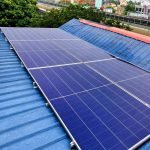
Mounting needs careful thought. Metal sheds, RCC roofs, and cold storage buildings all require different approaches. Non-penetrative aluminium rails, ballasted designs, or custom fabrication help respect load limits while leaving room for safe cleaning. Dust from foundries or process emissions, and sticky residues in certain industries, need regular attention through planned maintenance.
Modern TOPCon or bifacial monocrystalline modules in the 550–590 Wp range, paired with dependable string inverters, deliver solid generation and slower degradation over time. Tier-1 panels with strong performance warranties continue to be the safer long-term choice.
Cost, Savings, and Payback
Current turnkey costs for industrial systems in West Bengal generally fall between ₹40,000 and ₹45,000 per kilowatt. The final figure depends on roof type, height, cabling runs, structural needs, and approval processes.
Typical planning ranges look like this:
- 50 kW: ₹20–22.5 lakh, with monthly savings often between ₹60,000 and ₹80,000
- 100 kW: ₹40–45 lakh, monthly savings frequently ₹1.2–1.6 lakh
- 250–500 kW: multi-crore investments that scale the savings accordingly
A 100 kW system can produce roughly 1.4 to 1.6 lakh units a year. Most projects reach payback in three to five years. Facilities with heavy daytime loads often land closer to three years. Over a full twenty-five-year life, the cumulative savings comfortably exceed the original investment. Accelerated depreciation, where it applies, improves the after-tax picture further.
What Makes a Project Succeed
A few practical steps separate good installations from average ones. A thorough site survey checks roof strength, orientation, shading, and the existing electrical setup. Accurate load profiling ensures the system size matches actual daytime consumption. Quality components and properly engineered mounting matter. Structured maintenance with remote monitoring and regular cleaning keeps performance steady, especially in dusty industrial environments. Complete paperwork for net metering and safety compliance avoids delays later.
Net metering rules under the West Bengal Electricity Regulatory Commission support industrial users. Capacity stays linked to the sanctioned load. Approvals involve the relevant distribution company and, for larger plants, the Chief Electrical Inspector. Direct capital subsidies remain limited for commercial and industrial projects. The main benefits come from lower electricity bills, tax treatment, and contribution toward renewable purchase obligations.
Working with C-Fritts Power
C-Fritts Power operates from Kolkata and focuses on engineered rooftop and commercial-industrial solar work across West Bengal. The team handles WBSEDCL and CESC net-metering processes, uses Tier-1 panels with long performance warranties, and manages projects from the first assessment through design, installation, and ongoing support. Familiarity with local roof types, dust conditions, and regulatory steps helps keep projects on track.
Frequently Asked Questions
How much can a factory or warehouse actually save?
It depends on system size, the applicable tariff, and how much of the solar power gets used on site. Projects in the 50–250 kW range commonly deliver monthly savings from ₹60,000 upward into several lakhs. Recent 250 kW installations have projected annual savings between ₹18 lakh and ₹28 lakh
What kind of payback period should we expect?
Most well-matched systems recover their cost in three to five years. Heavy daytime consumption often shortens that to around three years.
Will solar work on metal sheds and cold storage roofs?
Yes, provided the structure is assessed properly. Engineered mounting solutions exist for PEB sheds, metal roofs, and cold storage buildings. Load limits must be respected.
Are there subsidies for industrial solar projects?
Direct capital subsidies are limited. The main financial benefits come from reduced electricity bills, available tax treatment such as accelerated depreciation, and support for renewable purchase obligations.
What size system does a typical warehouse need?
It varies with available roof area and actual electricity use. Many industrial installations fall between 50 kW and several hundred kilowatts. Larger facilities move into the megawatt range when space and load allow.